Registrations are now open for a new global Kishotenketsu learning cohort, scheduled to run from October 2026 to February 2027.
The journey unfolds across two series of ten learning weeks, with a reflective pause over the festive season — creating a six-month rhythm of immersion, experimentation and integration.
Where this begins
Anyone who works with groups knows this moment: You have designed carefully. You hold a clear intention. You begin facilitating. And suddenly something unexpected happens.
A shift in atmosphere.
A resistance.
A silence.
A spark.
In such moments, facilitation becomes less about following a script and more about sensing what is alive in the space.
Kishotenketsu offers facilitators, teachers, coaches, social workers, change makers, community developers and all group practitioners a place to explore how to continue working with ease, sensitivity and creative confidence — even when plans dissolve.
Because facilitation is learned not primarily through theory, but through practice, reflection and shared experience.
What Kishōtenketsu means
Kishotenketsu originally refers to an East Asian storytelling pattern in four movements — describing how a narrative naturally unfolds.
Ki — entering the space
Shō — immersion deepens
Ten — a twist reveals new insight
Ketsu — integration restores balance
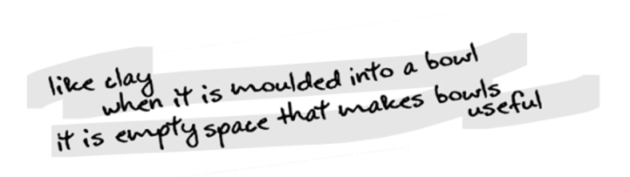
Over time this pattern has inspired a broader approach to the design and facilitation of learning environments and community processes. It suggests a gently structured yet non-intrusive fabric — a warp and weft within which learning and collaboration can evolve organically. At first the facilitator hosts the process with care and invitation, like welcoming honoured guests. Later, the hosting role becomes distributed — almost invisible — as the community itself begins to sustain the learning journey.
The spirit of the program
We are living in a post-information age. Content is abundant. Knowledge is searchable. What becomes rare again is meaningful experience. Collective inquiry. Shared transformation.
Across more than forty years of work spanning Asia, the Middle East, Africa, Europe and South America, Francis Laleman has explored unconventional formats for restoring organizational learning and community practice to something more human, more creative, and more ecological in nature.
Encounters with diverse traditions — from community residencies in rural India to narrative theory and contemporary arts practice — gradually shaped what is now known as the Kishōtenketsu movement.
How the learning journey unfolds
The online cohort lives in multiple simultaneous spaces:
• continuous asynchronous learning conversations
• guided e-learning pathways (Skool Beyond Borders)
• 8 peer-driven facilitation and design assignments
• 8 live full-cohort online plenary sessions
• 2 individual coaching sessions
• experimentation in participants’ real-world contexts
Estimated learning commitment: approx. 2 hours per week, spread over 20 weeks
Total learning time: approx. 40 hours
Participants learn primarily by facilitating, designing, observing and reflecting.
Core exploration fields
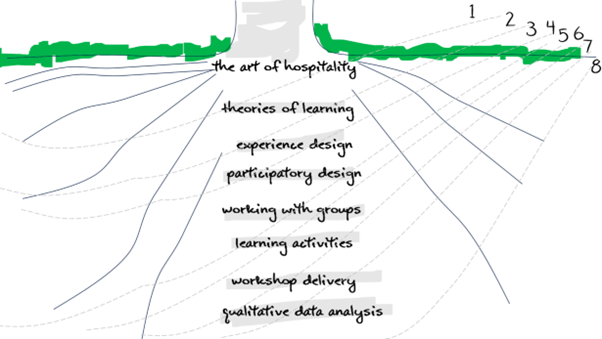
During the program we collectively explore eight interconnected domains:
Hosting and Guesting — facilitation as symbiotic systems gardening
Theories of Learning — classical and emergent perspectives
Experience Design — shaping meaningful learning journeys
Participatory Design — co-creation with communities
Working with Groups — sensing dynamics and patterns
Design and Facilitation of Learning Activities
Workshop and Program Delivery
The Learning Metrics Conundrum — understanding impact beyond measurement
The precise trajectory is always shaped by the cohort itself.
Outcomes and certification
Upon completion, participants receive a peer-attested and collectively designed certificate of accomplishment, leading to official Certified Kishotenketsu Practitioner badgeholdership.
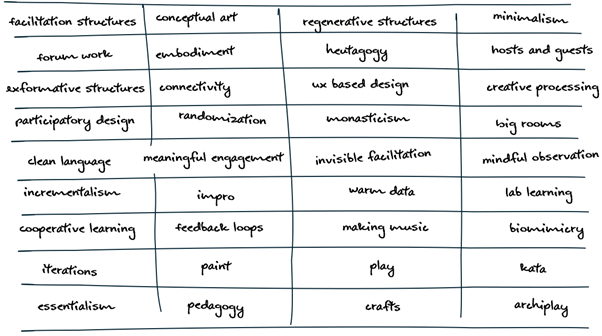
More importantly, participants leave with lived facilitation capability and connection to a growing global network of practitioners influenced by thinkers and artists such as Augusto Boal, Paulo Freire, Rabindranath Tagore, Johan Huizinga, Yoshi Oida, Masanobu Fukuoka, Gregory Bateson, Maria Montessori, Jacques Lecoq, Kenya Hara, Lev Vygotsky and many others.
For whom
This journey is for the curious: For anyone working with groups, learning or change — including facilitators, teachers, coaches, instructional designers, organizational developers, HR practitioners, social workers, change enablers, community organisers and experience designers.
If you feel drawn to creating learning spaces that are alive, artful and deeply human, you may find resonance here.
Your facilitator
Francis Laleman (bio) is a Singapore-based Asia Studies specialist, Sanskrit and Pali teacher, and non-conventional education designer. His path has moved from doctoral research in India to monastic apprenticeship, social work, the Agile movement and decades of global facilitation practice. He has been designing and teaching unconventional learning methodologies for more than forty years across Asia, the Gulf region, the Middle East, South America and Europe.
Co-facilitation, platform content moderation and cohort management: Brent Byron Cheng Que.
Voices from earlier cohorts
“A refreshing immersion into practice from the very first moment.”
“This program changed how I understand facilitation.”
“I discovered an entirely new way of designing interactive learning.”
“cooperative learning, safe space. I loved the (very) creative approach. what a refreshing way of introducing theory through immersion.”
”This program is a must-do for every trainer, teacher, facilitator.”
”Francis is a most inspiring trainer. Just observing him at work means so much to me. He makes you think creatively, kicks down a whole series of conventionally accepted models - and offers fresh alternatives to creative learning which exactly fits the needs of the trainees.”
”I am truly astonished by what I have learned in just a few days. I have discovered a whole new way of being a trainer, of providing interactive sessions - and Francis helped me explore how I can apply all these newly acquired insights and tools at my own workplace.”
Here are some more testimonials from earlier cohorts:
Francesco Bianchi - Jalaja Pillai - Cloe Berthiaume-Poulliot - Brent Que
Register now to join the Oct 2026 TO Feb 2027 global cohort.
The total registration fee is EUR 1200 or GBP 1050, SGD 1800, USD 1400
Payment of choice: pay from any bank to Wise
Choose your currency according to your location (EUR, GBP, SGD, USD).
Mention: KSTK 2026
For transfers done through Wise, expect a receipt from
Agile Facilitation Beyond Borders Pte Ltd (Singapore).
Alternatively, pay from any bank app to Paypal
Mention: KSTK 2026
For transfers done by these means, expect a receipt from
Francis Laleman bv (Belgium).
For enquiries and scholarships, reach out here.